Thursday, October 22, 2009

Is the Mobile Phone Portable Interactive Art?


Interactive Art and the act of machine mediated interactivity is a concept , theory and practice that came about in the 1930's; however in todays art world it is still being coined as the "New-Comer" to art. This essay explores the cultural fad that surrounds interactivity in objects such as the mobile phone whilst discussing the four stage theory of the Interactive Art experience and making it relevant to the common mobile phone. This essay attempts to state the the mobile phone is the new form of interactive art and one that we do not have to go to an art gallery to experience.
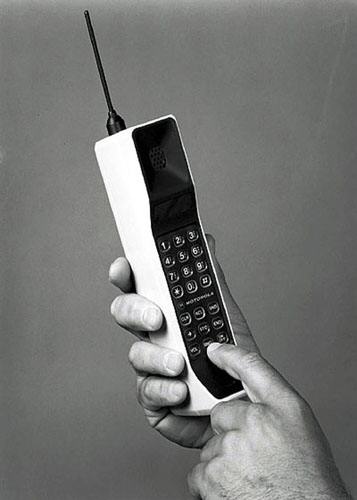


It is incredible to imagine the 1957 Sweedish mobile, developed by Erricson that weighed 40kg in comparison to the mobiles of today. (http://www.buzzle.com/articles/when-was-the-first-mobile-phone-invented.html) Throughout my life time I have been through 5 mobiles and have now found myself with not just a mobile.


The Samsung F480 allows the user to take photos, video capture, email access, sending of messages and pictures via sms, computer gaming, applications such as the calendar, voice recorder, alarm clock, full touch screen and an mp3 player and much more. I have had the chance to customize the ring tones for my friends and be able to upload my recent playlsit for those annoying lectures. The Morning Show said this morning "that people can not live without their mobile phones" and "people are spending more on their mobile phone bills than they are spending on petrol", which is simply astonishing and can easily be brought down to the level interactivity that occurs when customizing a mobile phone. This also makes the statement "I would die without my mobile phone" ring true to many.

Human beings have always been soo interested in new technology that even artists have jumped on their keyboards and mice and have created a hybrid art which has been chronicalled by The Powerhouse Museum in Sydney in an exhibition called Beta-space; which "shows interactive art works at different stages, from early prototype to the end product." This exhibition is a fantastic educational tool about interactive art but it also allows up and coming interactive artists to showcase their work to the public and to be able to gain valuable feedback in return. When interacting with an interactive art piece there's a phenomenon of embodiment and disembodiment in the object which is much like the experience of customizing and individualizing a mobile phone. The paper entitled "Understanding the Experience of Interactive Art: lamascope in beta-space" describes the experience of the participant in four stages.

Stage one consists of the initial response of the participant in relation to the artwork is self. This stage is when the participant percieves the object as seperate or disembodied from the self. "The person interacts with the object and waits for a response before deciding how to interact further". The second stage is called control and this is when the participant assumes full control of the creative output of the artworks' interactive capacity and thus "plays it like a musical instrument". Therefore the participant grows comfortable and feels a power and mastery when interacting with the art piece and concluding allows self embodiment in the object or work to take place. The third stage is a non interactive stage that deals namely with the participant in a disembodied state with the object and in a practice of contemplation. This stage is one of evaluation and an analysis of the experience in order to decided to continue the experience or abandon it. Stage four is one of complexity and often in the result of stage three feels almost controlled by the interactive artwork. Upon realization of this the participant then gains pleasure in being controlled and thus allows the embodiment in the artwork or object once again.

After reading this paper it became almost impossible to seperate the compatability of these stages of interactive experience, to that of the experience of using and individualizing a mobile phone. Stage one represents the initial purchase of the object and taking it out of the box and packaging for the first time. There is anticipation and surprise while turning it on for the first time and it creates an ununified experience with the object and participant, therefore creating a disembodied experience. Stage two is that of control, and something that comes with knowing exactly how to use the handset. There is no more suprise or anticipation and while using the handset the self embodies itself in the object, exactly as it would while interacting with an interactive art piece. Stage three is that of contemplation or in our case evaluation. This is the moment that you assess and rate the mobile on its usability, applications and the user experience that it provides you. Stage four is when the mobile user realises the limitations of the mobile and its applications and begins to understand the control that the mobile has over them. When a mobile phone rings, you answer it, when you recieve a message you read it and when it beeps to tell you that it is out of battery you charge it. In the end it seems the mobile phone is controlling us, but because of the functionality, applications and necessity in modernity of the mobile phone; society and us as mobile phone owners are willing to overlook it and rather get pleasure from it.


In concluding even though interactive art and the common mobile are on much different scales to one another, in comparison to interactive experience theory they are rather similar. Through the utilization of this theory it has been demonstrated how the stages of response, control, contemplation and belonging can easily be associated from the mobile phone to grand scale interactive art works. This essay has made me look differently at my mobile phone and I hope it does the same for you.
Bibliography
Kreuger M 2008, Artificial Reality, viewed 16 October 2009,

Costello B, Muller L, Amitani S & Edmonds E 2005, Understanding the Experience of Interactive Art: Lamascope in Beta_space Creativity and Cognition Studios Press; Sydney. Pp49- 56

Cason N 1998 Interactive Multimedia: An Alternative Context for Studying Works of Art Studies in Art Education- A journal of issues and research. National Art Education Association: pp 336- 349

Huhtamo E 2004 Trouble at the Interface, or the identity Crisis of Interactive Art, University of California Los Angeles, Pp1- 9.

Edmonds E, Mulle L 2009, Living Laboratories: Making and Curating Interactive Art, Creative and Cognition Studios Press; University of Technology Sydney. Pp 1- 4.

Jenkins, H 2006, Convergence Culture: Where Old and New Media Collide, New York University Press; London and New York.

Penny S, 1996 From A to D and Back Again: The Emerging Aesthetics of Interactive Art, Leonardo Electronic Almanac pp 1- 5.

Dominic. M McIver Lopes 2001, The Ontology of Interactive Art, Journal of Aesthetic Education Vol. 35 No.4 University of Illinois Press.

Huhtamo E 2004, Seven Ways of Misunderstanding Interactive Art, Media Studies University of Lapland. Pp 1-4.

Nagashima Y 2002, Interactive Multimedia Performance with Bio-Sensing and Bio-Feedback, Shizuoka University of Art and Culture, Japan pp 1- 4.


Sunday, October 4, 2009

Week 9 Task

So from what I hear for the week nine tutorial task was to scan a piece of art that we have created in the past or recently. I am currently doing a degree in theatre and contemporary arts, so the amount of art projects that I have comoleted are in the many.

Firstly before I show you the kind of art that I have done in the past I would like to show with you how new communication technologies have taught me to not only be a better artist but they have actually taught me step by step how to use entire programs such as Photoshop and Illustrator.

I bought a magazine that was basically a tutorial program about how to use Photoshop CS2 and it also gives you a few projects to attempt. After completing these I searched the internet and founf that there was numerous sites that taught step by step how to do particular things on photoshop and to create images from nothing.


A few websites to have a look at are:

http://www.good-tutorials.com/


This site has tutorials for Flash, Illustrator, Photoshop, Java, CSS, HTML, Java script, php, ruby, ruby on rails, 3D's max. This is definately the one stop shop for all of your tutorial needs. This site is the google of tutorials but for more specific tutorials take a look at the other sites below.


Tutorialized


This is also a site that I visit frequently and I find that it is very user friendly. These tutorials are a great way to see somethng that you like and then be able to create it.
I would suggest having a look at a couple other sites, but the top two are very recommended by me.


So here is some of my work:


This is my most recent piece of art. It is a collage based on the fairytale of Alice in Wonderland. I created this image because I was building a website that looks exactly like this only it is fully animated and there are a couple of embellishments. I learnt how to do this image by a simple tutoial that I found through Good-tutorials.


This is one of my headshots that I manipulated so it looks like a negative. I was just playing around with photoshop when I created this one.

I hope you like them...


Thursday, October 1, 2009

The Electronic Cigarette?


The Electronic Cigarette
It all began with this blurb:
Imagine once again being free to smoke in your favourite
nightclub, restaurant, or shopping. Movie theaters, sporting events,
Taxis and even aeroplanes and all free smoking zones as long
as you have Cigrati Electronic Cigarette...
Imagine all these benefits in a product that looks, feels, tastes
and smokes like a tabacco cigarette.
So this got me interested and a little curious. I had never heard about one or seen one so I decided to investigate. I found the original link on Facebook and I had a look at two films.
The first film is a promotional video about how the video works and one that got me very interested (by the way I do not speak).
So after watching this video I was even more intrigued, and it looked really interesting; alien in fact. So then i found this film from an Australian who had but the Cigrat cigarette and was talking on a web cam on Facebook about his first impressions of the product.
So basically if you can notbe bothered watching a 10 minute video this is a cigarette that was a purchased off the internet site for $140 AUD and Luke 9 (the man on the video) says very straight that this not a healthy cigarette, but it is just a healthier alternative. With this kind of cigarette you have to suck much harder to get the level of smoke that you usually would have with a cigarette. There is a major saving with buying one of these but still I don't think it is that great.
For me it is like going to a candy store and seeing a a great candy bar and then trying it and then reaizing that it tastes like crap. I think this is what is going to happen if I bought this cigarette. I do not smoke but when I looked at the video of the first impression I decided that this is definately not the thing for me.
I thought that it was important to include in my blog because this is the kind of new technologies that I am interested and I had never heard about the electronic cigarette.
I hope you enjoyed it.

Tuesday, September 22, 2009

Consumption and Production Lecture Week 8


In the lecture in week 6 we discussed consumption and production and the how we consume produced content. We looked at how this is done in "The Big Screens of Life" and in "The Small Screens of Life".

Big Screens of Life

In the "Big Screen of Life" society consumes the content of cinema. It is something that is attended to, and something that is consumed in relation to content. It is not something that the society as a whole has produced, but it is something that is a shared experience with members of the public in way of an audience. We can also mention the Television as this is something that is shared privately in the home. The PC is also in the Big Screen of Life because it is made of content that has been specifically designed for the user.

Small Screens of Life


As described in the lecture notes the small screens of life is in relation to "consumers becoming increasingly involved in the production of products, and they also produce their own identities in the process of consuming and producing products. (Facebook, YouTube).

The Personal Media Player is a platform that allows the used to personalize the device to the degree of the importing of music, songs and videos. There is also an availability for some brands to attach a new skin to the exterior of the Personal Media Player.
To a more extreme extent you can also mention the mobile phone, or the smart phone. Mobile phones and smart phones are also important to consider as they allow the creation of an identity through collation of photos, video, phone book, collection of messages, sent, received and drafted. There is also the ability to adapt the dashboards and widgets to your own personal theme.
It was also mentioned in the lecture tat most of the entertainment we produce is in a form that is too long and not readily accessible via mobile networks. As time and technology has furthered, so has the need for mobile phone accessible pages; and slowly this has come in to fruition. You can now access your bank of choice, YouTube, Twitter and many more. Currently news and information through mobile internet and 3g Portal News and Sport services are very popular and readily available to users; however there is a major lack of entertainment services.

We should also take a look at the "niche-market" of fan made sites and trailer mash ups. It is interesting to note that the consumer has become so interested in the content of a film or a comic etc that they have created an homage to the original or a spoof. The example that was given in the lecture was Star Wars fans producing "Troops" which is a star wars fan-film that is now consumed by Star Wars Fans. Embarrassingly enough I am a Twilight fan and after looking on YouTube for the latest video leaks I have come across numerous fan made trailers and spoofs.

New Moon Fan Made Trailer


Twilight Fan Made Spoof


Although these are fabulous and a great example of the work what was being discussed in class I found that it is sometimes very annoying in the instance that some YouTube users masquerade these files as the 'real' trailers and I have clicked on them not knowing that they are spoofs.

The Trailer Mash
The Trailer Mash is also a website totally devoted to collecting recut trailers and trailer mash-ups. Here is one of the Notebook that I found on this site. It is a Youtbe clip.


News

As stated before news is a booming area for mobile content production. "News Junkies" are responsible for a multitude of mobile news broadcasts and we can sometimes even see "shot- on - a mobile- phone' on actual TV news programs. Examples of this can be seen on ireport.
However there is an issue with content that has been produced from the camera on mobile phone. Not only does it sound terrible but the resolution is not so great either. Many 'cell-phone-movie' festivals have sprung up over the last 5 years and they have disappeared just as quick as they appeared for the same reason.

Here is an example of a short film that was shot on a mobile phone.

Midnight Paranoia


Overall this was a great lecture and I have learnt alot from this lecture. Actually prior to this lecture I had no idea that there film festivals dedicated to short films that were shot on mobile phones. It is fabulous. I heard of one and I think that it was for Toyota. Oh and I think Coca Cola did one too.

Peace!

Thursday, September 17, 2009

The Low Down on Week 7

Today Jason took the lecture, and you know that when he takes the lecture it is going to be a combination of incredible facts, unusual anecdotes about Oklahoma and a crazy American thrown in. Up to his usual stuff, Jason did not put up any lecture notes, so I had to take notes like crazy... So here is the low down...

Today we talked about various "Free Download" applications available on the internet. We also discussed Open Source Software and Freeware. In needing a better and more defined definition, I scowered the internet for a definition that would best sum up what I had not origanally been so clear on.

Open Source Software

Open Source Software is a program or application that is free for distribution and does not pay any royalties or fee for sale. The rationale as quoted on this web site is :

"By constraining the license to require free distribution, we eliminate the temptation to throw away many long-term gains in order to make a few short- termn sales dollars. If we don't do this ther would be lots of pressure for cooperators to defect."


Freeware

Although "Freeware" is indeed free it does come with a EULA licence which stands for End User Licence Agreement. Each agreement is different however these agreements often don't allow any altering of the program, repackaging or to sell it. These programs do not often offer technical support or a help menu. These programs are also only available for personal and non commercial use; and if used commercially it would break the agreement unless the coporation payed for the program.

In class we also discussed 5 application sites that include Open Source Software and Freeware or Shareware.

I also found these too.

  • TuCows
  • ZDNet
  • Snap Files

Mininova

Mininova is a torrent downloading website that I have used in the past and one that many of my friends also use. It is user friendly and it even gives you instructions on how to get started. You can download the latest films from this site, computer programs, games, plug-ins and spyware. Depending on the file size and your internet speed you may have to leave the file to download over night but normally by the next day it should be ready to install.

Sourceforge

Sourceforge is also a site that I have used in the past and one that I often still go to now and then. What I like about this site is that it has been divided up into folders that hold the downloads for specific programs, such as networking, database, education and gaming. This makes the downloads easier to find and much easily accessible. This site does not work off torrents like Mininova and you can not download films, but it is still a go to website.

Freeware Genius

Admittedly this is a site that I have never heard of before, but I have enjoyed looking through it. On first looks, it is a much nicer and appealing site than the last two. While looking at this site I found one program that caught my eye; "Viewer 2". It is a photo viewing program that allows you to group photos of similar size or by tag, and allows the way in which you view photos to be up to the user. I decided to download it and within 2 minutes I was playing with it. It is easy to use and a programe that I will not be erasing any time soon.

Portable Apps

This site says that the programs that are available on this site are:

"PortableApps.com provides a truly open platform that works with any hardware you like (USB flash drive, iPod, portable hard drive, etc). The entire platform is open source built around an open format that any hardware or software provider can use."

I took a look at the applications that are available and decided to download a game Jooleem Portable and I am downloading this while I speak .
This is another attractive site and one that I think I am going to take a serious look at. You can also download open office from this site.
Alright so I have taken a look at Jooleem Portable and it is an honestly addictive game. It is great that these are programs that you can put on your USB or removable Hard-drive. I think thse kind of programs would be great for academics and students who have alot on their USBS and need some programs to be portable. For example there are some computers at uni that do not have programs that others have, so these particular students are limited to particular computers that they can access and fulfill the requirements of their work.

Download.com

Well another aesthetically pleasing website. An attractive nature to this site is that it displays the top 20 downloaded programs, which gives me an idea of what the site has. There are programs in this list that I never would have thought existed, like a youtube clip downloader and Virtual DJ.

I have literally spent hours playing some programs on here and I must say that as a computer user you can not say that you are bored. There is so much out there to play with that there should never be a dull moment on the internet or with your USB.

That is all for now...
Take Care all

Tuesday, September 8, 2009

The Plan.... mwwaaaahhhhaaahhhhaaa week 7

OK... So Today I am going to be planning an internet hoax, but before I can do that I want research who has done what... what has worked... and basically what have been the real doozies.

Sidd Finch 1985

In 1985 Sports Illustrated published an article about Sidd Finch who was a rookie baseball player who had plans of playing the Mets. What made this story so interesting is that Sidd Finch has never played Baseball before and he could through a baseball not only with pin-point accuracy but he could also throw it at 168mph which is 65mph longer than the world record holder. The article noted that he was soo talented because of his work with Tibetan Monks that he had mastered the "art of the pitch". After this article was published there was a large amount of people that were interested in the article and alot of people asked for more information...
What this article does not tell you is that there is no such person existing. Just someone the author thought up...

The Taco Liberty Bell

In 1996 the Taco Bell Corporation reported that they had bought the Liberty Bell and that they were going to re-name it the "Taco Liberty Bell". Alot of people called to express their anger at the selling of the monument. A few hours later they explained that it was a practical joke but it is still priceless.

The Left Handed Whooper

In 1998 Burger King published a full page article in USA Today about the introduction of a new burger: the Left Handed Whooper, designed for the other 32 million other left handed American's. However there was no change to the contents of the whooper, it stayed the same however all of the sauces were rotated 180 degrees. Thousands of customers has gone into Burger King to request the Left Handed Whooper and it has also been noted that many people requested the right-handed whopper.
This is hilarious. Deffinately something that I am interested in doing. I think that this is the kind of way I am going to go about the video task....

Virgin Cola

In 1996 Virgin Cola released a statement of intent for the new technologically advanced can of coke. The can had been created with new technology so that when the contents of its can had passed its use by date, the contents in conjunction with the can would cause it go blue. This however was false and was made to attempt to overshadow the release of the new Pepsi Can that was blue.

All of this information has been provided by the museum of hoaxes and it is reference to April Fools Hoaxes. The reference can also be found on the links above.

As for what I will do.... to be honest I am not sure... I am considering going for something insignificant like the left-handed whooper and the blue coke can. Something that only a few people would be interested in, and something that is based on consumerism. hmmm, I am not sure. But I will keep you posted.


Thursday, September 3, 2009

Week 3 Film and Shot definitions.

This week we have been focusing on film and composition or for all of those film buffs "mise en scene". So here are the definitions that you asked for:


  1. VLS/WS = Very Long Shot and Wide Shot
The very long shot and the wide shot gives the viewer an overview of geography or setting. (Fox, 2003, http://www.urbanfox.tv/creative/shotsizes.html)


2. LS= Long Shot

The long shot takes the whole height of the person in the shot. It does not show as much background as the VLS but it does show enough that you are able to distinguish the location. (Fox, 2003, http://www.urbanfox.tv/creative/shotsizes.html)


MLS= Mid Long Shot


The Mid shot cuts off at the waist. It is a good shot to introduce people to your audience. You can also get a good image of the subject in their surroundings. (Fox, 2003, http://www.urbanfox.tv/creative/shotsizes.html)


MCU= Medium close up


The medium close up is the standard news interview shot (atleast in the UK). It is cut off at around the breast pocket. (Fox, 2003, http://www.urbanfox.tv/creative/shotsizes.html)


CU= Close Up


This is a shot of the full face. Sometimes used for interviews- especially when things are getting personal. It also pays more attention to facial expressions. (Fox, 2003, http://www.urbanfox.tv/creative/shotsizes.html)


BCU= Big Close Up


This is a very intimate shot. It is used for very dramatic moments, when the actor is giving it their all. (Fox, 2003, http://www.urbanfox.tv/creative/shotsizes.html)


ECU= Extreme Close Up


The Extreme Close Up shows great detail. You would normally need a specific reason to get this close. It is too close to show general reactions or emotion except in very dramatic scenes. http://www.mediacollege.com/video/shots/extreme-closeup.html


Now to all the questions.
Will And Grace (TVS)
Who: Will (Erick McCormack) is a gay Layer, Grace (Debra Messing) is an interior designer, Karen Walker (Megan Mullally) is the Grace's assistant and filthy rich, Jack (Sean Hayes) is the gay unemployed actor and Rosario (Shelley Morrison) who is Karen's maid.
What: the show is about lives of Will and Grace and their search for love while still trying to maintain their "fag hag" relationship.
Where: It is based mainly in the apartment block of Will and Grace and their offices in New York, Manhattan.
When: It is based in current time, however it is no longer being shot anymore, however you can buy the episodes on dvd, watch them and other related videos on youtube and you can also so them as re-runs on cable and standard tv.
Why: The show is one of its kind showing comparatively the lives, social stigma's and the loves of gay men and straight women and more importantly the way they maintain not so common relationships with each other.
How: The do this by openly showing audiences the kind of oppressions that are put upon gay men and woman whilst at the same time putting a humorously light on it.


http://www.imdb.com/title/tt0157246/