
Interactive Art and the act of machine mediated interactivity is a concept , theory and practice that came about in the 1930's; however in todays art world it is still being coined as the "New-Comer" to art. This essay explores the cultural fad that surrounds interactivity in objects such as the mobile phone whilst discussing the four stage theory of the Interactive Art experience and making it relevant to the common mobile phone. This essay attempts to state the the mobile phone is the new form of interactive art and one that we do not have to go to an art gallery to experience.
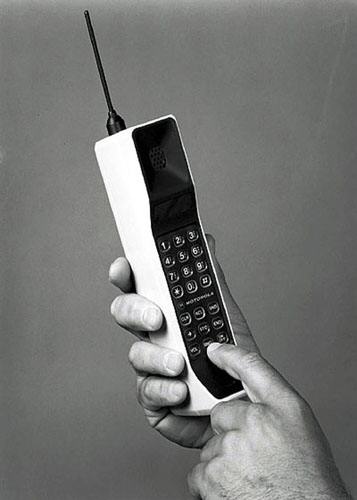
It is incredible to imagine the 1957 Sweedish mobile, developed by Erricson that weighed 40kg in comparison to the mobiles of today. (http://www.buzzle.com/articles/when-was-the-first-mobile-phone-invented.html) Throughout my life time I have been through 5 mobiles and have now found myself with not just a mobile.

The Samsung F480 allows the user to take photos, video capture, email access, sending of messages and pictures via sms, computer gaming, applications such as the calendar, voice recorder, alarm clock, full touch screen and an mp3 player and much more. I have had the chance to customize the ring tones for my friends and be able to upload my recent playlsit for those annoying lectures. The Morning Show said this morning "that people can not live without their mobile phones" and "people are spending more on their mobile phone bills than they are spending on petrol", which is simply astonishing and can easily be brought down to the level interactivity that occurs when customizing a mobile phone. This also makes the statement "I would die without my mobile phone" ring true to many.

Human beings have always been soo interested in new technology that even artists have jumped on their keyboards and mice and have created a hybrid art which has been chronicalled by The Powerhouse Museum in Sydney in an exhibition called Beta-space; which "shows interactive art works at different stages, from early prototype to the end product." This exhibition is a fantastic educational tool about interactive art but it also allows up and coming interactive artists to showcase their work to the public and to be able to gain valuable feedback in return. When interacting with an interactive art piece there's a phenomenon of embodiment and disembodiment in the object which is much like the experience of customizing and individualizing a mobile phone. The paper entitled "Understanding the Experience of Interactive Art: lamascope in beta-space" describes the experience of the participant in four stages.
Stage one consists of the initial response of the participant in relation to the artwork is self. This stage is when the participant percieves the object as seperate or disembodied from the self. "The person interacts with the object and waits for a response before deciding how to interact further". The second stage is called control and this is when the participant assumes full control of the creative output of the artworks' interactive capacity and thus "plays it like a musical instrument". Therefore the participant grows comfortable and feels a power and mastery when interacting with the art piece and concluding allows self embodiment in the object or work to take place. The third stage is a non interactive stage that deals namely with the participant in a disembodied state with the object and in a practice of contemplation. This stage is one of evaluation and an analysis of the experience in order to decided to continue the experience or abandon it. Stage four is one of complexity and often in the result of stage three feels almost controlled by the interactive artwork. Upon realization of this the participant then gains pleasure in being controlled and thus allows the embodiment in the artwork or object once again.
After reading this paper it became almost impossible to seperate the compatability of these stages of interactive experience, to that of the experience of using and individualizing a mobile phone. Stage one represents the initial purchase of the object and taking it out of the box and packaging for the first time. There is anticipation and surprise while turning it on for the first time and it creates an ununified experience with the object and participant, therefore creating a disembodied experience. Stage two is that of control, and something that comes with knowing exactly how to use the handset. There is no more suprise or anticipation and while using the handset the self embodies itself in the object, exactly as it would while interacting with an interactive art piece. Stage three is that of contemplation or in our case evaluation. This is the moment that you assess and rate the mobile on its usability, applications and the user experience that it provides you. Stage four is when the mobile user realises the limitations of the mobile and its applications and begins to understand the control that the mobile has over them. When a mobile phone rings, you answer it, when you recieve a message you read it and when it beeps to tell you that it is out of battery you charge it. In the end it seems the mobile phone is controlling us, but because of the functionality, applications and necessity in modernity of the mobile phone; society and us as mobile phone owners are willing to overlook it and rather get pleasure from it.
In concluding even though interactive art and the common mobile are on much different scales to one another, in comparison to interactive experience theory they are rather similar. Through the utilization of this theory it has been demonstrated how the stages of response, control, contemplation and belonging can easily be associated from the mobile phone to grand scale interactive art works. This essay has made me look differently at my mobile phone and I hope it does the same for you.
Bibliography
Kreuger M 2008, Artificial Reality, viewed 16 October 2009,
Costello B, Muller L, Amitani S & Edmonds E 2005, Understanding the Experience of Interactive Art: Lamascope in Beta_space Creativity and Cognition Studios Press; Sydney. Pp49- 56
Cason N 1998 Interactive Multimedia: An Alternative Context for Studying Works of Art Studies in Art Education- A journal of issues and research. National Art Education Association: pp 336- 349
Huhtamo E 2004 Trouble at the Interface, or the identity Crisis of Interactive Art, University of California Los Angeles, Pp1- 9.
Edmonds E, Mulle L 2009, Living Laboratories: Making and Curating Interactive Art, Creative and Cognition Studios Press; University of Technology Sydney. Pp 1- 4.
Jenkins, H 2006, Convergence Culture: Where Old and New Media Collide, New York University Press; London and New York.
Penny S, 1996 From A to D and Back Again: The Emerging Aesthetics of Interactive Art, Leonardo Electronic Almanac pp 1- 5.
Dominic. M McIver Lopes 2001, The Ontology of Interactive Art, Journal of Aesthetic Education Vol. 35 No.4 University of Illinois Press.
Huhtamo E 2004, Seven Ways of Misunderstanding Interactive Art, Media Studies University of Lapland. Pp 1-4.
Nagashima Y 2002, Interactive Multimedia Performance with Bio-Sensing and Bio-Feedback, Shizuoka University of Art and Culture, Japan pp 1- 4.
Costello B, Muller L, Amitani S & Edmonds E 2005, Understanding the Experience of Interactive Art: Lamascope in Beta_space Creativity and Cognition Studios Press; Sydney. Pp49- 56
Cason N 1998 Interactive Multimedia: An Alternative Context for Studying Works of Art Studies in Art Education- A journal of issues and research. National Art Education Association: pp 336- 349
Huhtamo E 2004 Trouble at the Interface, or the identity Crisis of Interactive Art, University of California Los Angeles, Pp1- 9.
Edmonds E, Mulle L 2009, Living Laboratories: Making and Curating Interactive Art, Creative and Cognition Studios Press; University of Technology Sydney. Pp 1- 4.
Jenkins, H 2006, Convergence Culture: Where Old and New Media Collide, New York University Press; London and New York.
Penny S, 1996 From A to D and Back Again: The Emerging Aesthetics of Interactive Art, Leonardo Electronic Almanac pp 1- 5.
Dominic. M McIver Lopes 2001, The Ontology of Interactive Art, Journal of Aesthetic Education Vol. 35 No.4 University of Illinois Press.
Huhtamo E 2004, Seven Ways of Misunderstanding Interactive Art, Media Studies University of Lapland. Pp 1-4.
Nagashima Y 2002, Interactive Multimedia Performance with Bio-Sensing and Bio-Feedback, Shizuoka University of Art and Culture, Japan pp 1- 4.

 This is my most recent piece of art. It is a collage based on the fairytale of Alice in Wonderland. I created this image because I was building a website that looks exactly like this only it is fully animated and there are a couple of embellishments. I learnt how to do this image by a simple tutoial that I found through Good-tutorials.

